

America’s Biggest Export Is Debt — What Happens When the World Stops Buying?
“If you don’t know who the sucker at the table is… it’s probably you.”– Old Wall Street saying
Imagine sitting at a Monopoly table.
Only this isn’t family game night — it’s the real global economy. America is the banker. China’s buying up half the board. Europe’s quietly brooding over Baltic Avenue. And just when you think you’ve figured out the rules…
The banker flips the board and says, “New rules now.”
That’s what’s happening in our world today. Quietly, but dramatically, the rules of money, trade, and power are being rewritten. We’ve entered what some call a monetary regime shift — the kind that only happens once every few decades.
Let’s break it down — without jargon, without panic, and in a way your 15-year-old nephew and your 75-year-old grandmother can understand.
Act 1: Bretton Woods — When the Dollar Became King
After World War II, the U.S. stood atop the rubble and said, “Let’s rebuild.” But not just buildings — they wanted to rebuild the financial system, too.
At a quiet retreat in Bretton Woods, New Hampshire, economists and politicians from 44 countries met in 1944. Their goal? Create a system that avoids the chaos of the 1930s.
Here’s what they came up with:
-
Major currencies would be pegged to the U.S. dollar.
-
The dollar itself would be pegged to gold (at $35/oz).
-
Countries could exchange their dollars for gold, if they wanted.
Think of it like a global cafeteria, where the U.S. served the food (dollars), and the promise of gold kept everyone fed and happy.
But not everyone agreed.
John Maynard Keynes, the British economist, proposed a more balanced system — one that would prevent massive trade imbalances. His vision included automatic adjustment mechanisms and user fees for surplus countries.
But the U.S. had the gold, the leverage, and the loudest voice. So Keynes’ “customs union” idea was shelved.
Thus began the age of dollar dominance.
Act 2: The Petrodollar — Oil Makes the World Go Round
The Bretton Woods system worked — until it didn’t.
By the 1960s, America was spending like a drunken sailor — funding the Vietnam War, the Space Race, and new social programs. Foreign governments, especially France, began asking:“Hey… remember that gold you promised? We’d like some now.”
In 1971, under pressure, President Nixon shut the gold window.The dollar was no longer backed by gold.
So what gave it value?
Oil.
America made a strategic deal with Saudi Arabia:
“You sell oil only in dollars. We’ll sell you weapons and protect your kingdom.”
This deal created the Petrodollar system — a new arrangement where oil (the lifeblood of modern civilization) could only be bought with USD.
So if you wanted oil, you needed dollars. And if you had extra dollars, you bought U.S. treasuries — America’s IOUs.
The U.S. exported paper, and imported real stuff. Everyone played along. For a while.
Act 3: China Enters the Chat — The Petroyuan Era
Fast forward to 1994.
China, emerging from decades of turmoil, saw an opportunity:“Let’s become the world’s factory.”
Here’s what they did:
-
Devalued the yuan to make exports cheaper.
-
Built massive manufacturing capacity.
-
Began stockpiling U.S. treasuries to keep the yuan low and the trade engine humming.
This era — dubbed the Petroyuan — wasn’t about oil being sold in yuan. It was about China and its Asian neighbors exporting goods in exchange for dollars, then recycling those dollars into U.S. debt.
It was a win-win. America consumed. Asia produced.Corporations made billions.The middle class in the West got cheaper goods.And over time, lost their jobs.
Act 4: The System Breaks — And the Old Rules Don’t Work
Today, we’re at another turning point.
-
The U.S. middle class is hollowed out.
-
China is slowing down.
-
Global trust in U.S. treasuries is fading.
The world is realizing: this system isn’t sustainable anymore.
Trump, JD Vance, and others are now openly criticizing the post-1971 setup. They want to reindustrialize America, reduce foreign dependency, and shift away from the idea that U.S. treasuries should be the world’s piggy bank.
We’re entering a new monetary regime — but one that hasn’t been named yet.
⚖️ Tariffs vs. Capital Controls: Two Levers, One Goal
The Trump team tried tariffs first — slapping up to 145% duties on Chinese goods in April.
Markets panicked:
-
The dollar fell.
-
Gold soared.
-
Treasuries sold off.
-
Stocks stumbled.
So they paused the tariffs. Too much backlash. Too much inflation.
Now, attention is shifting to the quieter weapon: capital controls.
These might include:
-
Taxes on foreign ownership of U.S. stocks, bonds, or real estate.
-
Bans on countries like China, Iran, and Russia buying U.S. land or assets.
-
Forcing domestic pension funds to buy long-term treasuries.
-
Imposing “user fees” on foreign capital parked in the U.S.
One popular proposal:
Tax foreign-held U.S. assets (worth ~$33 trillion) at 2% per year = $660 billion in revenue.Enough to eliminate income tax for 90% of Americans.
Now that’s a winning campaign slogan:
“No more IRS — foreigners pay for it.”
What This Means for Bonds, Bitcoin, and You
❌ Bonds Are the Bagholders
No one — not China, not Japan, not even U.S. investors — wants to hold long-term U.S. debt anymore.
Short-term T-bills are still popular. They act like cash with yield.But they aren’t enough to fund the growing debt.
So who’s going to buy all those treasuries?
Enter: The Money Printer (Again)
Despite the Fed’s tough talk, they’re already quietly buying long-term treasuries to keep yields from exploding.
This is stealth QE.
And according to JPMorgan and Jamie Dimon, official QE returns in 2026.
Because when the markets panic, America prints.
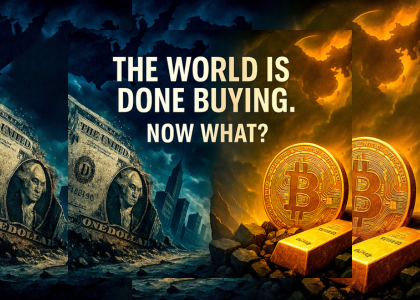
The Crypto Thesis: This Is Why Bitcoin Wins
When foreigners sell U.S. assets and flee —When the Fed prints to fill the hole —When trust in debt collapses…
Gold and Bitcoin skyrocket.
Why?
Because they are neutral assets.They don’t belong to any country, party, or central bank.
If the world is moving toward:
-
Capital traps,
-
Bond repression,
-
And inflation…
Then Bitcoin and gold are escape valves.
What Comes Next? A Dual Monetary World
Experts like Russell Napier believe the future looks bipolar:
-
A U.S.-led block, where the dollar remains a medium of exchange but no longer the world’s savings account.
-
A China-led block, possibly backed by gold, focused on Asia, Africa, and the Global South.
Two systems.Two philosophies.No single king.
What Should You Do?
Let’s keep it simple.
-
Avoid long bonds. They’re toast.
-
Short-term T-bills may work — for now.
-
Own gold. Own Bitcoin.Not because they’re trendy — but because they’re sovereign-proof.
-
Stocks may rise — but crypto may rise more.
This isn’t the end of the world.
It’s the reset.
And every reset is an opportunity — for those who understand the rules.
Want More Clarity, Less Noise?
Every week, we decode macro chaos into clear stories, smart takes, and no-jargon explainers.
Join hundreds across India, Australia, and beyond who trust Digital Duniya to stay two steps ahead.
[Subscribe now] — It’s free. It’s sharp. And it might just save you from being the sucker at the table.