

Thanks for reading Digital Duniya Podcast! Subscribe for free to receive new posts and support my work.
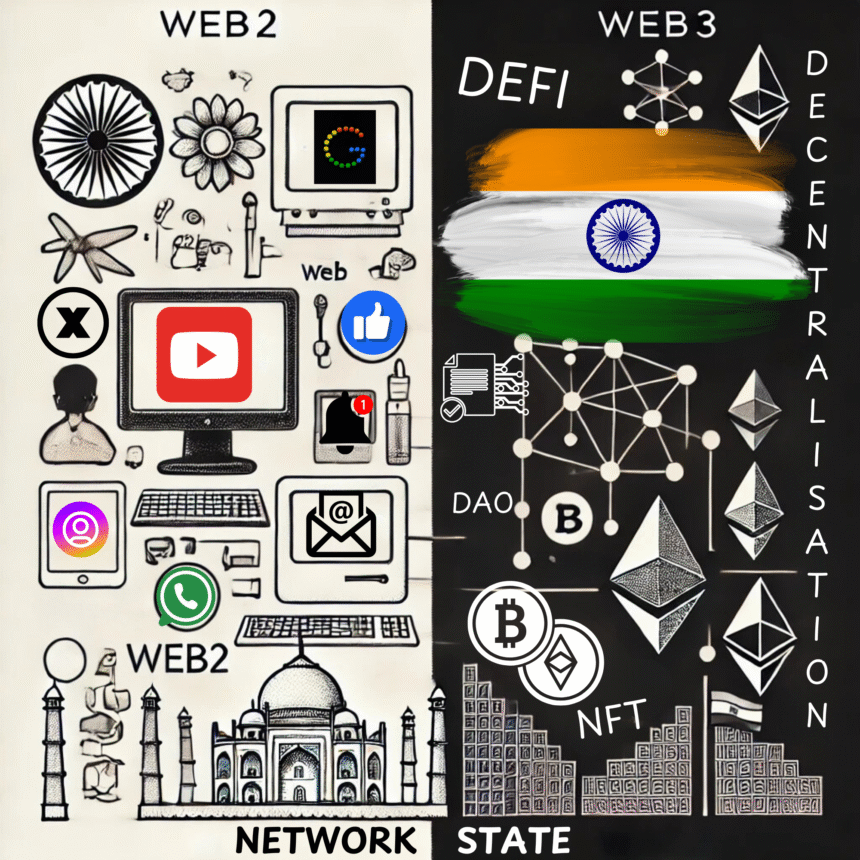
India’s digital transformation has been nothing short of revolutionary. With over 600 million internet users, the country has emerged as a digital powerhouse, becoming the largest market for major platforms like WhatsApp, YouTube, Facebook, and Instagram. From limited internet access to leading the global stage in user numbers, India has rewritten the digital playbook in the Web2 era. But as the world moves towards Web3, a new chapter is set to unfold—one in which India isn’t just a follower but a dark horse poised to shock the world.
From Web2 Dominance to Web3 Potential
India’s rapid digital rise was fueled by affordable internet and a vast young population eager to embrace new technologies. By 2016, the introduction of Jio’s low-cost data plans catalyzed mass internet adoption, pushing platforms like WhatsApp (535.8 million users) and YouTube (476 million users) to their largest global user bases. India’s influence was so significant that its demands for regional content and mobile-first services shaped the development of these platforms.
While this success is noteworthy, it sets the stage for India’s next leap into Web3. In Web2, India was a massive consumer base, but in Web3, it has the potential to be a global leader and innovator.
India’s Path to Web3 Leadership
India’s journey from Web2 dominance to Web3 leadership is not just a possibility—it is a natural progression. The same factors that propelled India’s rise in Web2—a large population, affordable internet, and a young, ambitious workforce—are setting the stage for the country’s Web3 revolution.
1. Financial Inclusion via Web3’s DeFi
Despite India’s digital advancements, the country still grapples with substantial financial inclusion challenges, where a significant portion of the population remains without reliable access to traditional banking services. Decentralized Finance (DeFi), a fundamental pillar of Web3, presents an opportunity to address these gaps by offering borderless financial solutions that bypass conventional intermediaries. Through the use of stablecoins and decentralized lending protocols, DeFi can enable underbanked communities to access essential financial services, fostering growth at both local and national levels.
This approach leverages the decentralized nature of blockchain to open up a new world of opportunities for those previously excluded from traditional banking channels.
2. Empowering Creators with NFTs
India’s booming creator economy, built on platforms like YouTube and Instagram, is perfectly positioned to benefit from Web3’s NFT revolution. By enabling full ownership and direct monetization of digital assets, NFTs allow Indian creators—whether artists, musicians, or influencers—to reach global audiences without the need for centralized platforms. This empowers them to build global brands while retaining full control over their intellectual property.
3. India’s Growing Developer Ecosystem
Indian developers are already making substantial contributions to the global Web3 ecosystem, showcasing the country’s growing role as an innovation hub. For instance, Polygon, a leading Layer 2 scaling solution, was co-founded by a team with strong Indian roots. Similarly, EigenLayer, an innovative restaking protocol built on Ethereum, was established by developers of Indian origin. Another notable project, Instadapp, a significant player in DeFi, was also created by developers from India.
These pioneering projects underscore the strength and rapid expansion of India’s developer ecosystem. As this ecosystem continues to mature, the coming decade is likely to witness Indian developers creating more decentralized applications (dApps) that address local and global challenges. Their contributions will not only expand India’s influence but also play a pivotal role in shaping global standards for technology and governance in the decentralized era.
Challenges on the Road to Web3 Adoption
Despite its vast potential, India must overcome certain hurdles to realize its leadership role in Web3.
1. Regulatory Uncertainty
India’s cautious stance on cryptocurrencies has created uncertainty in the blockchain space. Clear regulations around crypto assets and blockchain applications are crucial for fostering innovation. Developers, businesses, and investors need regulatory clarity to build confidently while ensuring consumer protection from market risks.
2. Web3 Education
Although India boasts a large pool of talented developers, many are still unfamiliar with the nuances of Web3 technologies such as blockchain, DeFi, and NFTs. Closing this knowledge gap will require efforts to educate developers, businesses, and the public about the potential of decentralized technologies. Enhanced education and awareness will accelerate adoption and innovation.
India’s Global Influence on Web3 Standards
India’s journey into Web3 is more than just about adoption. It’s about influence. Just as India’s massive Web2 user base shaped the development of major platforms, its growing Web3 presence could shape the global standards for decentralized governance, smart contract security, and blockchain infrastructure.
With its developer ecosystem maturing and projects gaining global traction, India is in a position to guide the evolution of decentralized solutions. Indian innovations in Web3 could become benchmarks for the rest of the world, ensuring that the decentralized future is inclusive, secure, and scalable.
Conclusion: India’s Web3 Future
The story of India’s digital transformation in Web2 sets the stage for its next leap into Web3. The challenges of regulatory uncertainty and Web3 education may slow the journey, but they are not insurmountable. India’s vast developer ecosystem, combined with its young, tech-savvy population, is a powerful engine ready to drive innovation in the decentralized space.
As Web3 unfolds over the next 10 years, India’s leadership in the decentralized economy will likely be as transformative as its rise in the digital world during the Web2 era. The infrastructure is in place, the talent is growing, and the demand for decentralized solutions is real. India is on the path to becoming a global leader in Web3, influencing not just markets but global standards, and as the world watches, the decentralized future is taking shape in India.