
A quiet drop in bond yields reveals a loud divide in how America’s top minds see the future.
On April 1, 2025, the U.S. 10-year Treasury yield quietly slipped to 4.157%. No front-page drama. No financial pundits screaming “recession.” Just a number — down 65 basis points over 11 weeks.
But for those who know where to look, this wasn’t just any number. It was a whisper. A subtle signal from the bond market — and depending on who you ask, it’s either a warning… or an opportunity.
Jeffrey Gundlach Hears an Echo from the Past
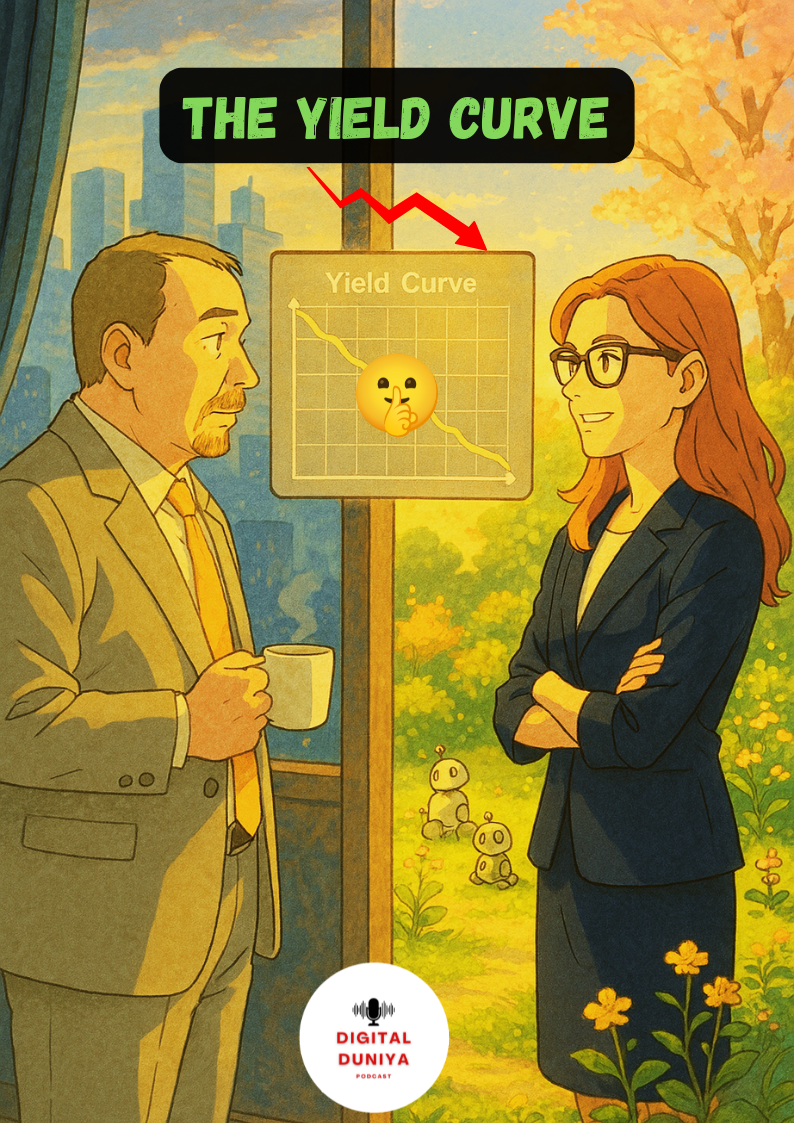
Imagine Jeffrey Gundlach — “The Bond King” — looking out over the LA skyline from his office window, coffee in hand, watching the yield chart move.
A drop like this — with inflation still hovering above 4% on short-term metrics — is exactly the kind of dislocation that has preceded recessions in the past. It happened in 2000. It happened in 2007. And Gundlach has made a career out of spotting the turn before most people even realize a bend is coming.
With President Trump’s reintroduced 25% auto tariffs, pressure on the Fed to cut rates, and energy-focused rhetoric, Gundlach may well see this as the beginning of another slowdown. The market, in his view, isn’t confused — it’s bracing.
But Cathie Wood Sees a Different Future
Now picture Cathie Wood, founder of ARK Invest, scanning the same data — and smiling.
To her, the falling yield isn’t a sign of fear. It’s the market pricing in long-term deflationary forces: AI, automation, robotics, decentralization — the very trends ARK has been betting on for years.
Rising inflation, she might argue, is a temporary glitch from outdated systems and geopolitical shifts. Trump’s push for domestic production and supply chain independence? That’s not bad news. That’s the start of a structural reset — one that rewards innovation and reinvention.
Same Chart. Two Interpretations.
This isn’t just a divergence in opinions. It’s a clash of philosophies.
One shaped by historical memory and macro caution.The other powered by exponential thinking and tech-fueled optimism.
And in that tension lies something powerful — not just about markets, but about how we interpret signals in a noisy world.
Final Thought:
The yield curve doesn’t shout. It whispers.
And as always, the most important question isn’t what it says — it’s what we choose to hear.
If you enjoyed this perspective, share it with someone who loves decoding market psychology. And if you’re new here — welcome to Digital Duniya. Every week, we translate signals from the Web3 and macro universe into stories worth your time.
Subscribe to stay ahead of the curve (pun fully intended)